
About Springfield Groundhogs
Springfield groundhogs are the largest species in the squirrel family. It is also well known by other names such as land-beavers, woodchucks, and whistle-pigs.
Here we will find out about its appearance, biology, life cycle, habitat, diet, and behavior:
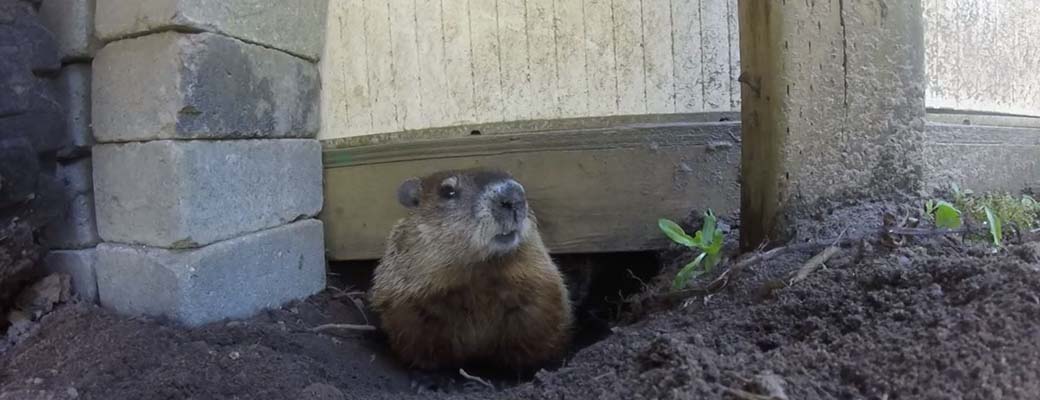
Appearance:
Males and females do not differ much in appearance. They have gray to red-brown fur which consists of a dense undercoat and a layer of strong awn hair on it. Striking in the physique is muscular that is designed for digging shoulder belt and the strong front paws.
Biology:
Illinois groundhogs are rodents and adults average 8 to 10 pounds. Their length of about 50 cm and they have a 20 cm long tail. The weight fluctuates strongly in the course of the year but is on average about 3 kg.
Life Cycle:
Illinois groundhogs live in family groups consisting of an older couple and several years of juveniles. Males and females have separate rankings. Between the family associations, territorial boundaries apply. The mating takes place in May, after five weeks wearing an average of four blind, deaf, fur and toothless born which are nursed by the mother until they can leave the building at the age of about 40 days. The life expectancy of a marmot is about 12 years.
Habitat:
They are usually found in the majority of the eastern and central part of the United States. They are also found in Canada and Alaska. They generally prefer areas which have a meadow or open field. They spend most of their time underground in burrow complex systems which have been dug by them.
Springfield groundhogs live above the tree line on alpine lawns and come up to heights of 3000m. At low altitudes, you can hardly find them, as they do not tolerate heat well. For the construction of their buildings, they need deep soils.
Diet:
While Illinois Groundhogs also dig up roots in early spring, later leaves, flowers, soft fruits, vegetables, herbs, and grasses are preferred. During the summer, mummified animals specialize in plants that have a particularly high level of unsaturated fatty acids such as Alpine clover, as they benefit from these substances during hibernation.
Behavior:
Springfield groundhogs remain active during the daytime from the season spring to fall. They go in deep sleep in October and rising in early spring. They always protect each other by using high-pitched shrills and warns to other groundhogs about the threats.
If any predators try to enter their burros, they try to fight with their curved claws, large, and sharp incisors. They also use their large teeth to kill an animal and for finding food for eating.
Visit our Springfield wildlife removal home page to learn more about us.
© 2018 Springfield Wildlife - Wild Animal Removal Services
